Sit on your hands
The whole method, and where it came from.
The thing I keep coming back to
School teaches kids how to follow instructions and get the right answers. That is a real skill.
It is also completely useless for everything that comes after.
Think of the most capable person you know at work. The one who spots the cost nobody accounted for or works out that everyone is solving the wrong problem. They didn't learn that at school.
They learned it in their twenties, doing junior work. Reading the documents, checking the numbers, sitting in on meetings they didn't follow yet, and watching someone senior make a decision. The tasks were dull, but doing them for years is how judgment got built.
That first job is thinning out. Across major industries globally, entry-level openings and graduate pipelines have plummeted as automation absorbs the foundational tasks junior workers used to rely on for experience.
The apprenticeship that produced everyone senior is being removed, and school was never built to replace it.
So it has to start earlier, and it has to start at home.
How I know
I went to good schools. I passed the tests and forgot the material the next day. I pulled the all-nighters, I got the degree.
Then I started at a design firm and was handed this: design a lightweight, stackable dining chair that embodies understated Italian elegance, everyday comfort, and efficient manufacturing.
I had done briefs at school. But a school brief has no client, no budget, no factory, and nobody who is disappointed on Friday. This one had all four, and I remember thinking, where do I even start?
What taught me was everything that came after. Years of trial and error. Learning to trust my gut when there was nothing else to go on. Running five accounts at once. Being shouted at by a line manager because my proposal went over budget. Working out whether to fix the brake problem or keep saving for the trip to Greece.
None of that was on a syllabus, and all of it is what I actually use.
I could once explain the symbolism of a blue curtain in a Renaissance painting well enough to pass. So can a phone, instantly, for nothing. What a phone cannot do is handle the friction of reality—the material that weighs too much, supply lead time issues, and the realization that your first idea failed.
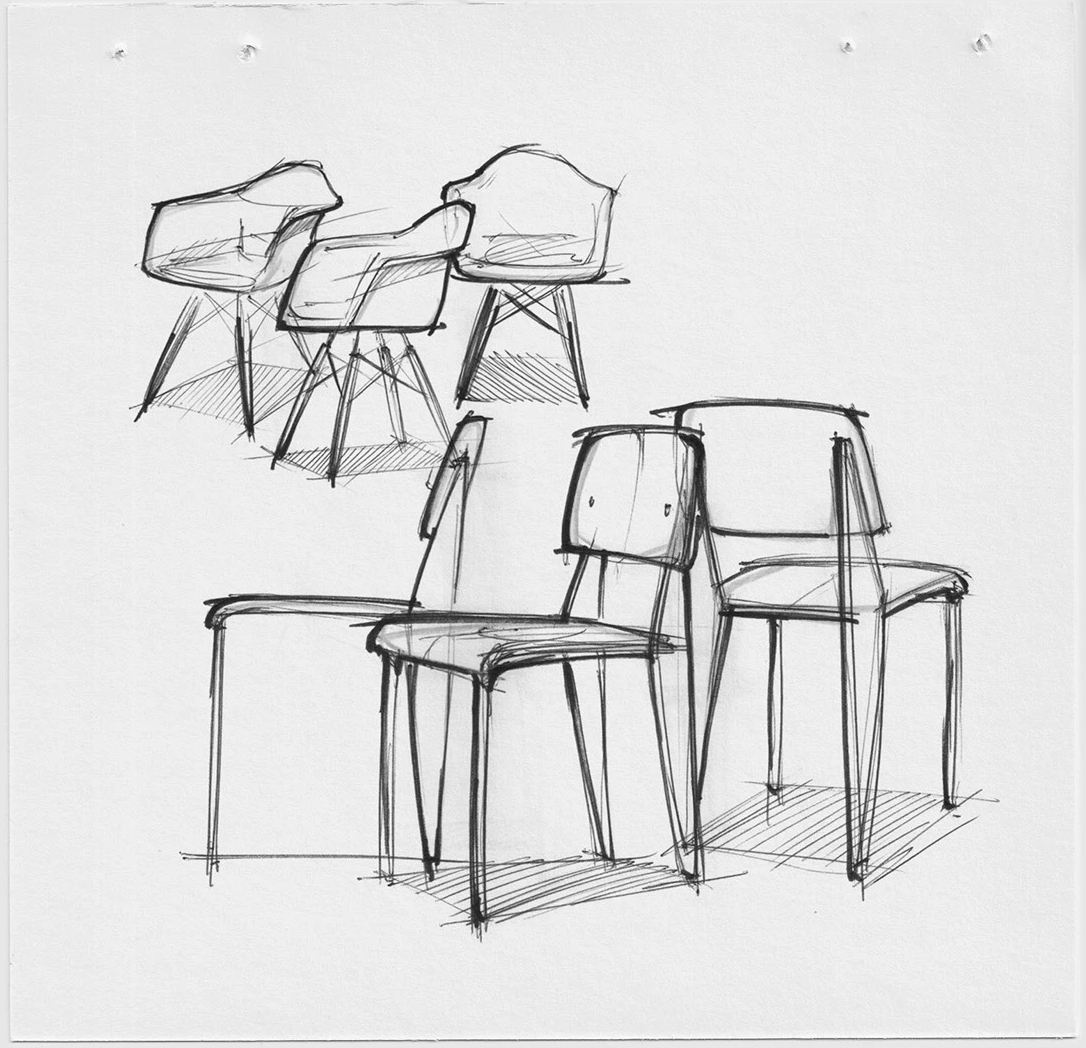
Photo: Anaïs Bourcier
The method, in one sentence
I set children real challenges, built on something they already care about, with the hard parts left in.
Three parts, and each one is doing work.
Part one: it has to be theirs
Nobody pushes through a hard problem they are not curious about.
This is the part I got wrong for years. I chose the subject because I could see what would be good for them, then couldn't understand why they wouldn't persist.
But look at what actually happens. A child grinding through something they chose is learning that the bad bit passes. A child grinding through an assignment you handed them isn't building internal ownership; they are just learning how to manage your expectations.
So the challenge starts from what is already there. Football, video editing, streetwear, Minecraft, Greek myths, whatever it actually is. Not a subject you wish they liked.
The common objection: my child isn't interested in anything.
To an adult, an interest with no obvious future attached doesn't look like one at all. But there is a real version of this problem, which is that children cannot want things they have never encountered.
That is where a parent is genuinely useful, and it is the one job I would not hand to anyone else. Not choosing for them. Supplying material.
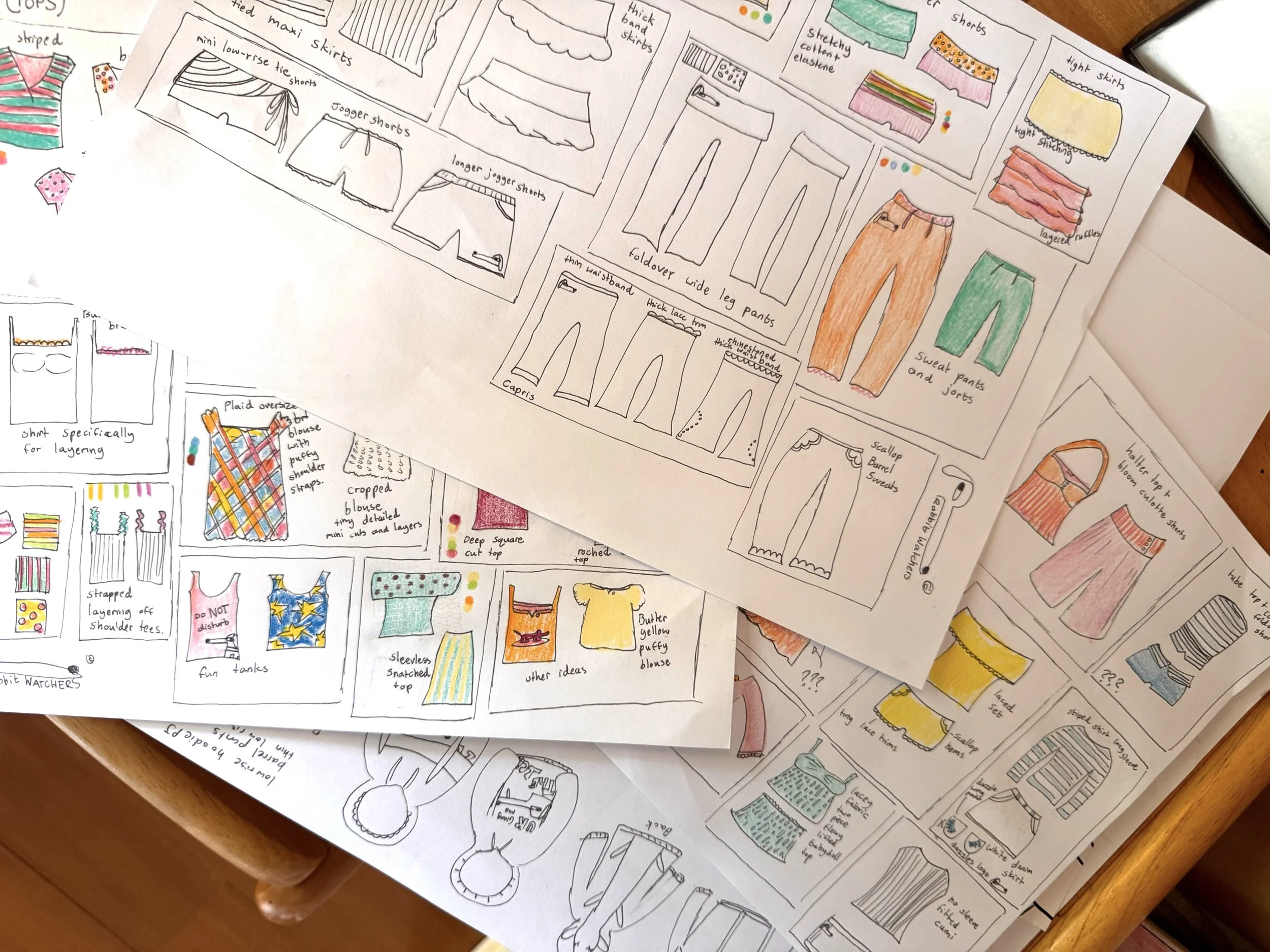
My daughter was deep into Y2K fashion, so last month I mentioned Delia’s, the American mail-order catalogue every teenage girl obsessed over in the 90s… No suggestion, no task - just a memory.
It sparked something, and she decided she wanted to build her own line. Which instantly collided with a wall: how do you actually get clothes made?
A week later, she spent three hours figuring out what a tech pack is, fought through the frustration, and woke up early the next morning to keep going.
She is still going. She has changed the logo five times. She asked whether I could get her 150gsm fabric swatches and I said I had genuinely no idea where you would find those.
She went and found out. Not because I was useful, but because it is hers and she thinks it is fun.
That is worth saying plainly, because parents assume this requires them to know things. It requires almost the opposite.
And here is what I got wrong for a long time.
I used to hand out general briefs. A list of twenty things to try when you are bored. Or simply: how about this, or this, or this?
None of it landed. It did not land even when the suggestion was something I had watched them lose an entire hour to. Beading. The trampoline. Lego.
If it does not come from them, the curiosity to go past the bare minimum never appears. Knowing what your child likes turns out not to be the same as it being theirs that day, and a list of good options is still a list somebody else wrote.
Part two: it has to be real
Real means there is an outcome outside the family. Somebody who is not you sees it, uses it, buys it, plays it, or says no to it.
Not a project with a grade at the end. Not a certificate.
A real challenge has three properties.
No answer at the back. If it can be resolved by a search or a chatbot query, it is homework in a costume. The question has to be one nobody has answered yet, which usually means it is about a specific place, a specific person, or a specific thing they want to exist.
An external check. Somebody outside the house decides whether it worked. A manufacturer quotes a minimum order of 100 units. A customer on the market stall walks past without looking twice. A local skate shop refuses to put the board on consignment.
A finish line they can see. Not "get better at" anything. Something that either exists at the end or does not.
Part three: the hard parts stay in
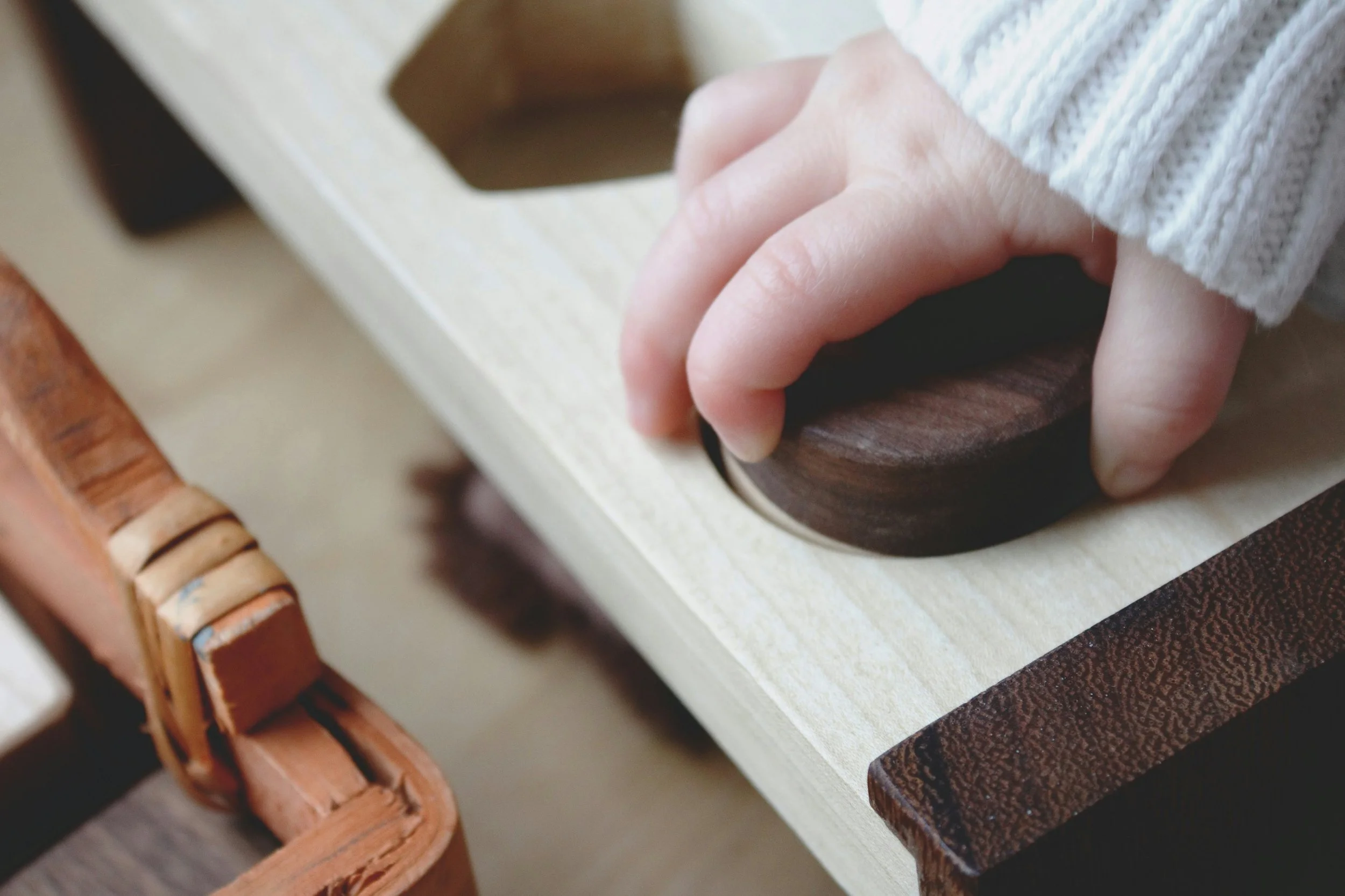
Years ago, at an open day at a Montessori school with my first child, the new children were allowed to pick a tray and try a station on their own. I was at a table with another mother and her nearly three-year-old, matching wooden shapes to the right holes. Circle into the circle. Pentagon into the pentagon.
The child was struggling. The mother, watching, reached over and did it for her.
The headmistress came past and told her to sit on her hands. However long it takes.
I have thought about that sentence for over a decade. It is hard to watch a child struggle. It is also the entire thing, because resilience is not a quality you have, it is a callus, and it forms one attempt at a time. We want children who can take a knock, get up, try again, fall over, get up again, because that is what the rest of life consists of.
It starts with getting the triangle into the triangle hole at two, even if it takes twenty minutes.
This is the part people find uncomfortable, and it is the whole mechanism.
A challenge with the difficulty removed teaches nothing, because the difficulty was the lesson. The sleeve that will not sit right. The first supplier quote that is far too expensive. The three evenings building an app before discovering somebody has already made a better one.
Every instinct you have will tell you to smooth those out. Doing so is the single most common way this fails.
What that looks like in practice:
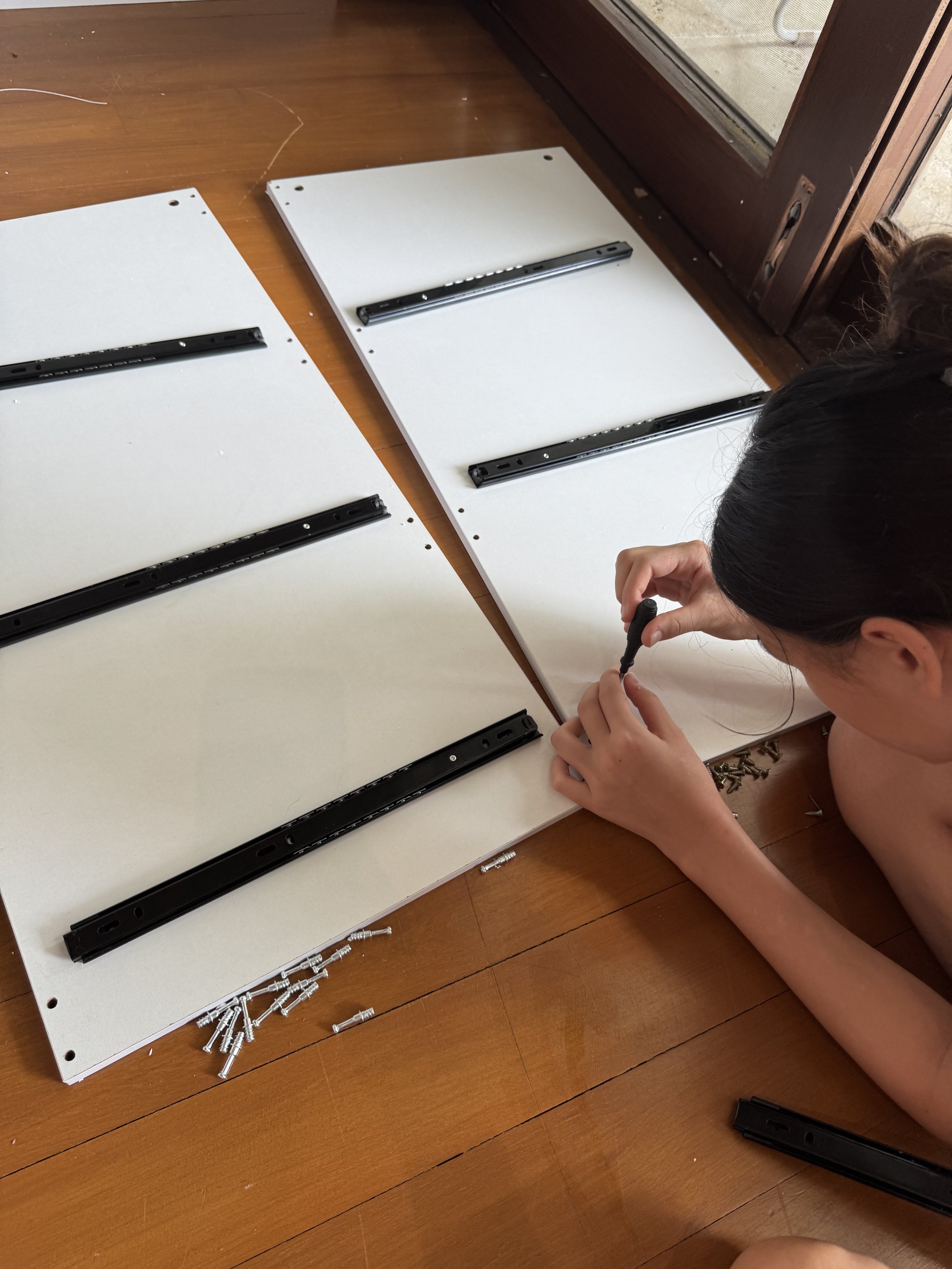
Buy the parts. Then say nothing about how to do it, including when you can see the mistake coming.
When it goes wrong, and it will, the instinct is to solve it. Say this instead: "I don't know either. Come and tell me if you work it out." Then do not step in for twenty minutes. Not five. Twenty.
If they ask whether they are doing it right, resist grading it, even positively. A mark from you turns it back into an assignment.
And when it works, do not say so out loud. Instead: "Look at that. You actually figured it out." Or better yet, just let them show it to someone else, so the win belongs to the world and not to your approval.
The line I will not cross
Danger. Real distress. True impossibility. Those get an intervention.
Frustration gets nothing. Learning where that line sits is the whole game.
The questions that do more than any challenge
The challenges matter. The questions matter more, and they cost nothing.
After they make something, look past the outcome and ask about the friction. One genuine observation fused to one real question: "That transition in the middle scene is totally seamless. How did you keep the lighting from flickering between frames?" Then say nothing else. No lecture, no grading, no bringing it up at dinner - though if you stay quiet, they will almost certainly end up doing all the talking about it anyway.
Then, routinely, three more:
Walk me through how you got to that.
What would happen if this part failed?
If you could start over, what would you change?
None of those is a trap, and none requires you to know the subject. A child asked them every week finds them unremarkable, because that is simply what happens after you make something. A child never asked finds them frightening.
They are also, as it happens, the only questions that ever matter in a room where real work is judged.
What working looks like
Not a finished app. Not a football practice session repeated fifty times until the target falls.
Early on, building friction tolerance looks like a child complaining for less time, eventually progressing to an adolescent who pauses and tackles a project independently. The core marker across all ages is how a child handles hitting a wall, choosing to sit with discomfort rather than seeking parental intervention.
Eight signs they are building friction tolerance, none of which can be scheduled:
They do the boring part. They stick with dull logistics, like supply lines, without quitting.
They go again after it fails. They quietly restart after a collapse instead of demanding a fix.
They sit with the frustration for twenty minutes. They tolerate the uncomfortable space of not knowing.
They copy something hard on purpose. They embrace challenges outside their comfort zone.
They write down what happened. They document failures to track what works.
They finish it, then care how it looks. They push through the unglamorous final stretch.
They do the talking. They present their own outcomes without looking for parental rescue.
They do not need you to say it is good. The win belongs to their own resourcefulness.
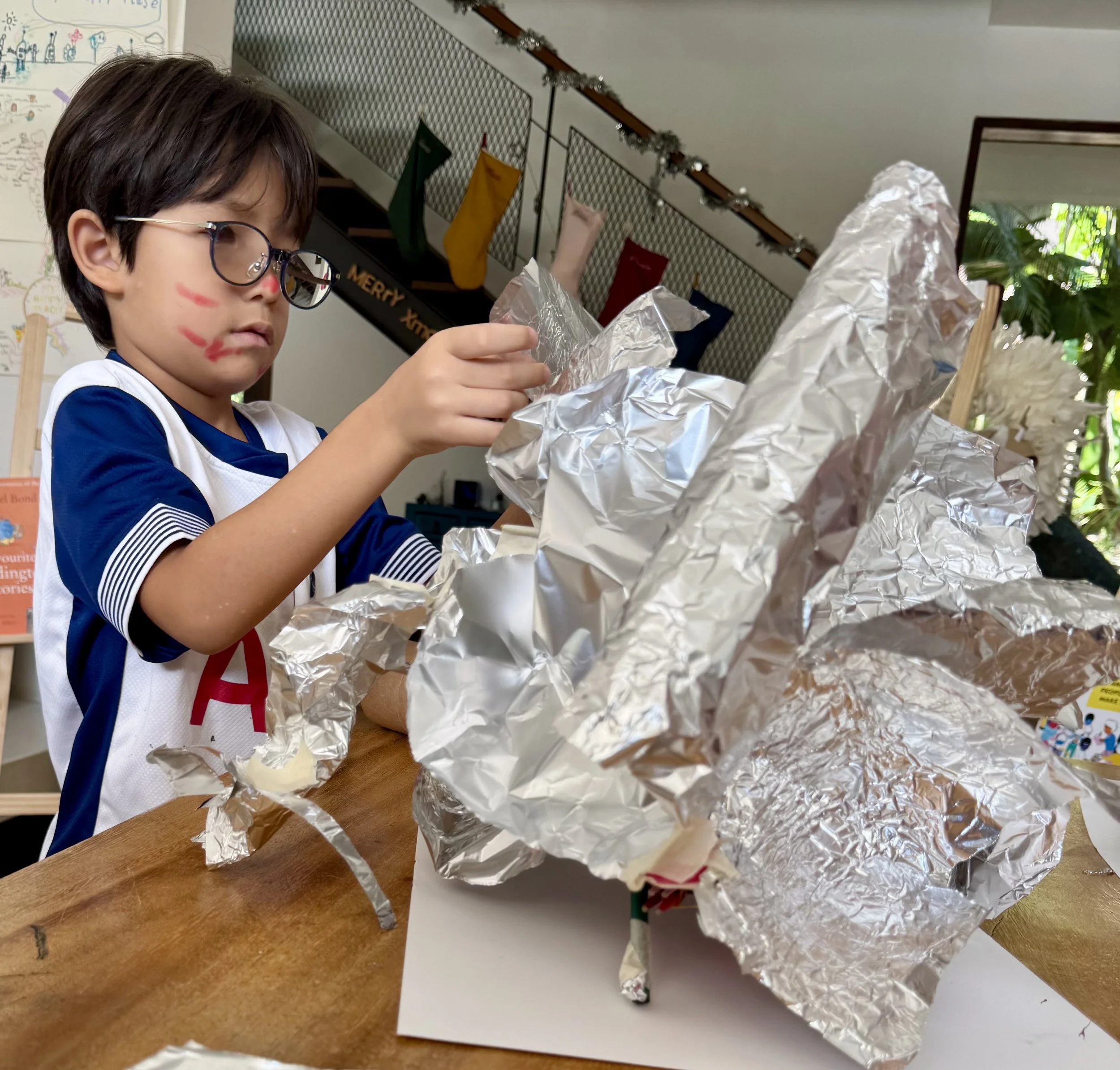
And the slowest version of this is the most reliable. My daughters have been responsible for our pets since they were small. Feeding, grooming, baths. Started young enough that it never registered as a chore, because it was never framed as one. Another creature's wellbeing depends entirely on them, so it became something they stopped questioning years ago.
That is what a decade looks like. Not a project. A thing they no longer notice themselves doing.
But we don't have a spare hour
Almost nobody does, on paper.
It usually comes out of the screen time that is already scheduled as rest, or out of the twenty minutes spent arguing with a sibling about what to watch. If there is time to scroll, there is an hour in the week somewhere.
It just isn't sitting in the calendar with a label on it, which is why it feels like it doesn't exist.
And once you have found it, the worst thing you can do is fill it for them.
Does this work at 4? At 15?
A four-year-old is malleable and easily delighted. Put the Hot Wheels or the beading set away for a fortnight, bring them out again, and they are brand new. You don’t need to manufacture a lesson; you just need to leave the floor empty and let them discover it on their own terms.
A fifteen-year-old wants independence and does not want a parent hovering over their time, managing it. Which is precisely what this offers them: agency, and the assumption that they can be trusted with something real. It is the rare thing you can hand a teenager that is not a rule.
What this is not
It is not anti-school. School builds a baseline that matters. If your child needs a qualification, they need it, and nothing here argues otherwise. But notice what that capability is...
It is not unschooling. This runs alongside whatever education they are already getting, in hours that are currently unplanned.
It is not a course. There is no certificate, no ceremony and no gold star, on purpose.
It is not quick. It is years of small repetitions, most of which look like nothing is happening. You will not be able to point at the moment it worked.
Where to start this week
One hour nobody has planned.
One thing they want to exist that does not exist yet. Not a hobby, an object. A shelf that fits the gap. A better version of a game they already play. Something they could sell.
Then let it go badly, and say nothing.
It will feel like you are doing nothing. You are. That is the work.
Step back. Let them get frustrated. Raise an independent thinker who can act without permission.

How I can help
If you would rather not spend the time figuring out the first challenge yourself, I engineer it for you. I design a specific, unscripted mission for one specific child, built entirely on whatever they are already obsessed with when left alone.
The child’s part is usually straightforward. They want to build, create, or solve what they care about.
The difficult half belongs to you. If you are the sort of parent who likes to be deeply involved, this will be intensely uncomfortable. These missions are meant to be worked on entirely independently.
What your child needs from you is the uninterrupted white space, and then the discipline to keep your hands to yourself.